
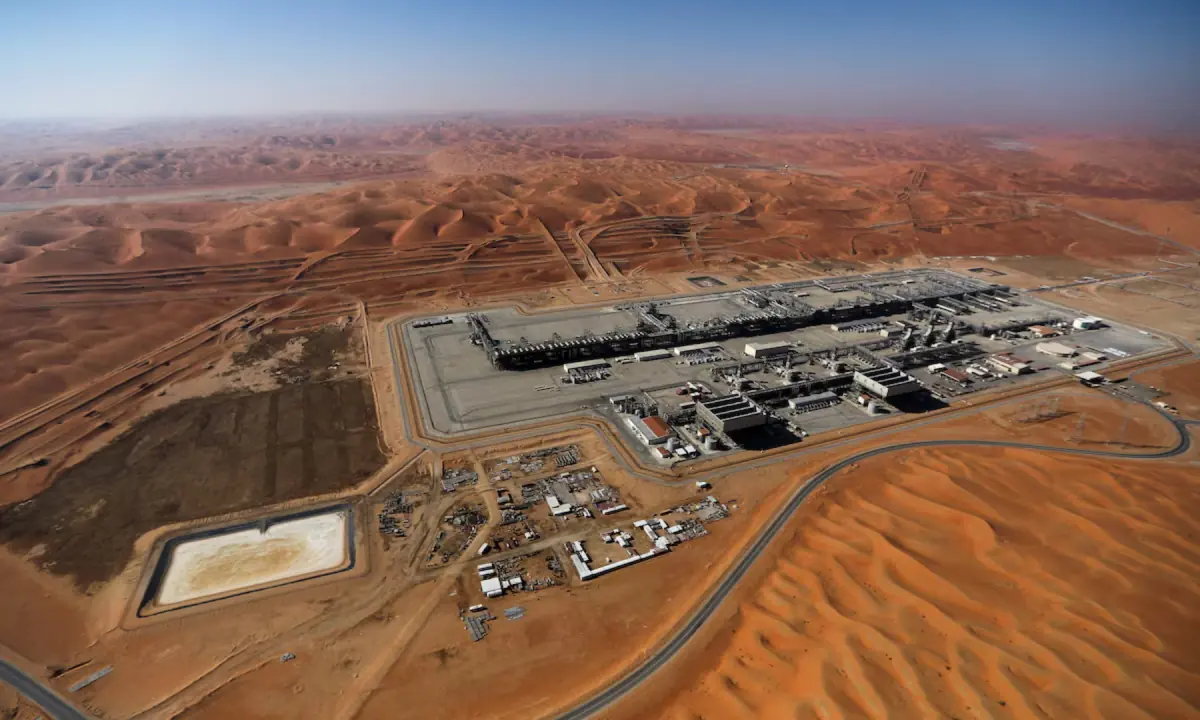
Asia depends on oil and gas from the Middle East, sourcing 60 per cent of its crude from the region, making it highly vulnerable if the Iran war causes a prolonged closure of the Strait of Hormuz supply route.
The Middle East is the world’s largest oil-producing and exporting region, shipping one in four barrels of crude exports daily, mostly through the Strait of Hormuz.
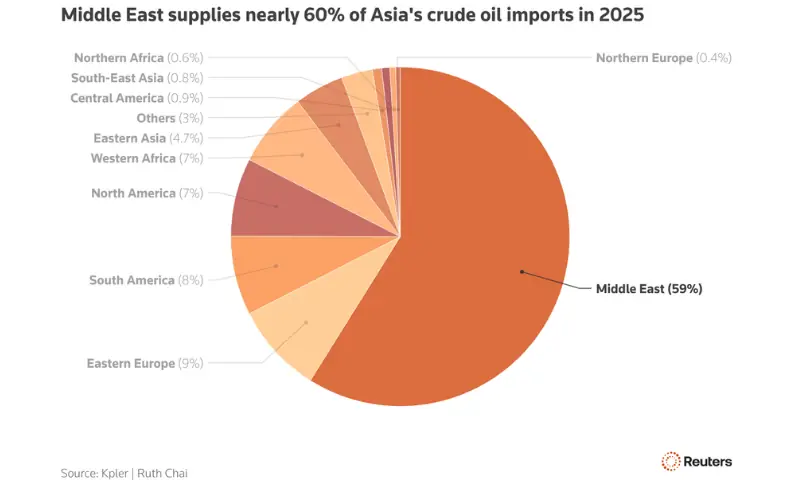
Asia imported 14.74 million barrels per day (bpd) of Middle Eastern crude in 2025, nearly 60pc of the record 25m barrels per day in total purchases for the region, according to data from shipping analytics firm Kpler.
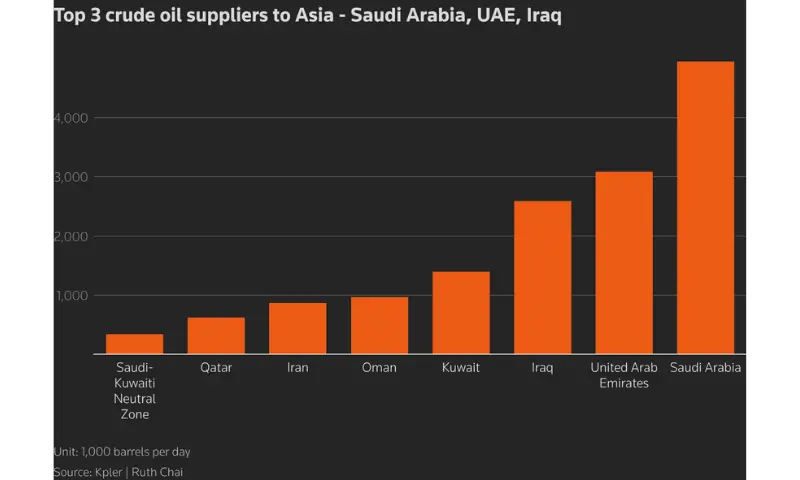
Saudi Arabia, the United Arab Emirates, and Iraq are the region’s top suppliers to Asia.
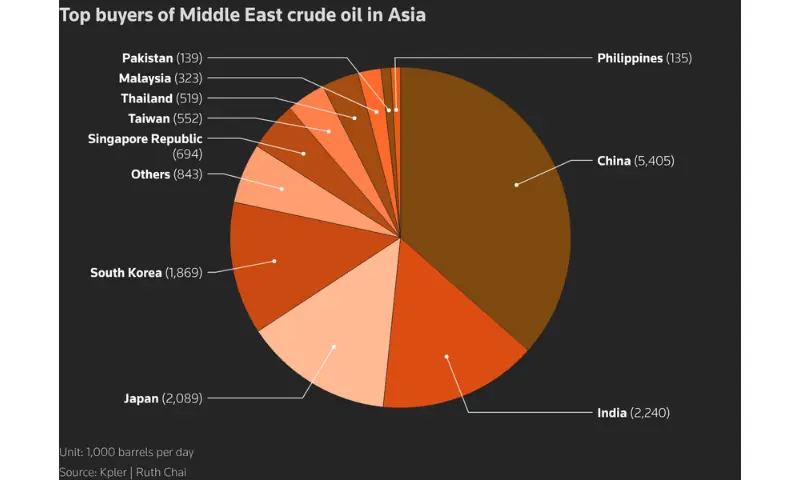
Among major buyers, Japan and South Korea are most reliant on Middle Eastern crude, which accounts for about 95pc and 70pc of their imports, respectively.
Singapore, Asia’s oil hub, increased its dependence on Middle Eastern oil last year to more than 70pc from about 50pc in 2024, after Exxon Mobil, completed a refinery expansion requiring more supply of heavy oil from the region.
China, the world’s biggest crude importer, sources about half of its seaborne imports - or 5.4m bpd - from the Middle East, Kpler data showed.
China, which also buys oil from countries including Iran, Russia, and Canada and produces more than 4 million bpd on its own, is known in markets for not relying on any one country for more than 20pc of its supply.
Middle Eastern oil shipments typically take 30 to 40 days to reach North Asia, and the voyages to India take less than a week.
Asia is the world’s fastest-growing region in terms of oil demand, and it is a net importer, as production in the Asia-Pacific region dwindles due to ageing fields and scant new discoveries.
Most Asian refineries are equipped with desulphurisation units to process high-sulphur crude from the Middle East, which is typically cheaper than low-sulphur grades, in order to generate higher margins.
Middle Eastern crude also contains large amounts of fuel oil, which can be processed into higher-quality fuels like gasoline and diesel. Fuel oil is also used as bunker fuel at top global refuelling ports, Singapore and Zhoushan in eastern China.
Saudi Arabia’s Asian market share, meanwhile, has grown as state energy firm Saudi Aramco acquired stakes in regional refineries to secure outlets for its crude.
While Asian refiners have been increasing the types of crude they can process to diversify their supplies, there is a limit to how much volume they can handle as changing grades affects refined-product output and fuel-blending requirements.
Also, most Asian refiners typically lock in more than 50pc of their crude requirements in long-term contracts to ensure stable supplies.

No comments yet. Be the first to comment!