
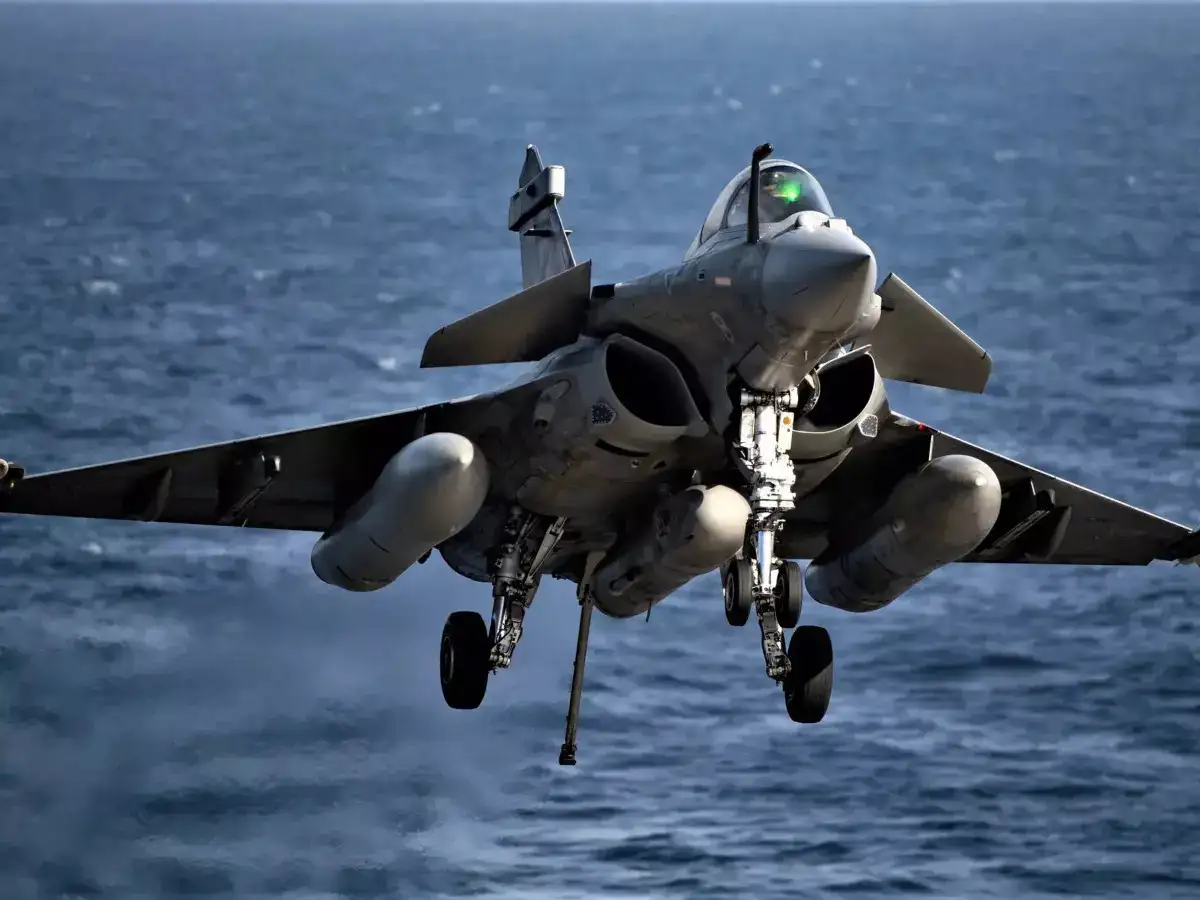
NEW DELHI / PARIS – In a crucial update on India's significant naval aviation upgrade, French aerospace major Dassault Aviation has confirmed that the delivery of the much-anticipated Rafale Marine fighter jets to the Indian Navy will be contingent upon the completion of an extensive pilot training program.
According to the company, the physical handover of the advanced fighter aircraft will commence only after Indian Navy pilots undergo a comprehensive 10-week training regimen in France.
This structured process underscores the complexity of integrating the 4.5-generation omnirole fighter into the Indian Navy's fleet. The training is designed to ensure that Indian pilots and ground crew are fully proficient in operating and maintaining the sophisticated systems of the Rafale before the jets arrive on Indian soil.
"The phased delivery of the Rafale jets is aligned with the training schedule of the Indian Navy pilots," a senior Dassault Aviation official was quoted as saying. "The first aircraft will be formally received in India only after the initial batch of pilots completes its training here in France, which is a standard and critical procedure for such advanced platforms."
The Indian Government had previously approved the procurement of 26 Rafale-M (Marine) fighters for its aircraft carriers, INS Vikramaditya and the soon-to-be-commissioned INS Vikrant. The jets are set to be a formidable force multiplier, significantly enhancing the Indian Navy's maritime strike and air defense capabilities.
This timeline indicates that the Indian public can expect to see the first Rafale-Ms touch down on Indian soil in approximately the first quarter of 2025, depending on the swift initiation of the training program.
A Strategic Partnership Takes Flight
The Rafale-M will be the first non-Russian fighter to operate from Indian aircraft carriers in decades, marking a strategic diversification of India's defense procurement. The 10-week training period is seen not as a delay, but as a necessary step to ensure seamless operational readiness and to build the foundational expertise required for this new chapter in Indian naval aviation.


No comments yet. Be the first to comment!