
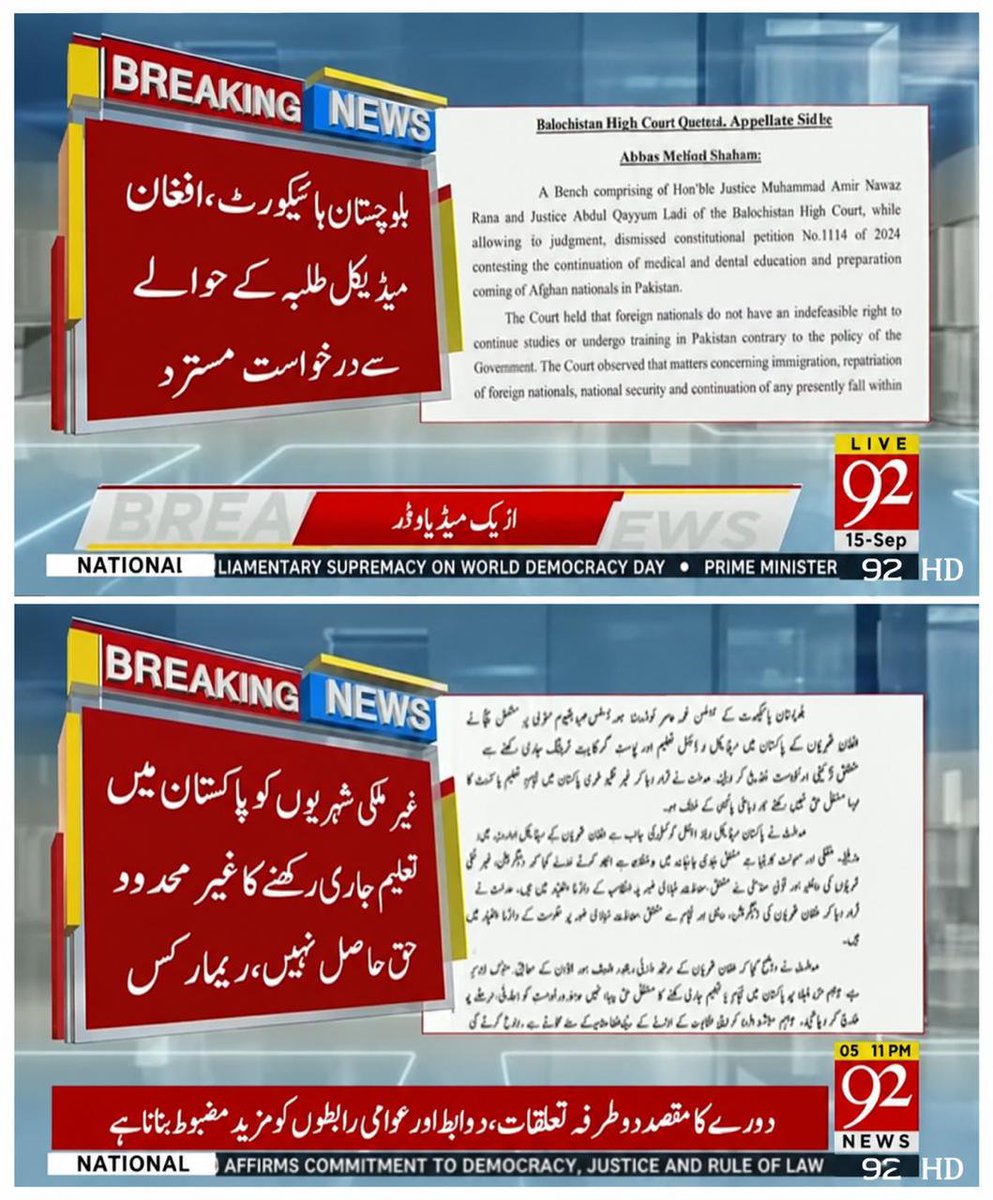
"Balochistan HC rejected the petition regarding Afghan medical students. Court directed affected students to approach the Afghan Embassy.Case was heard by Justice Muhammad Amir Nawaz Rana and Justice Abdul Qayyum Lehri. Court observed that foreign citizens do not have an unrestricted right to continue education in Pakistan.It stated that immigration, deportation and national security matters fall under the authority of the government."
The Balochistan High Court recently rejected a petition filed by Afghan medical students seeking the continuation of their studies in Pakistan. This decision, made by Justice Muhammad Amir Nawaz Rana and Justice Abdul Qayyum Lehri, highlights the complexities surrounding foreign education rights within Pakistans judicial and immigration frameworks. The court emphasized that the responsibilities associated with immigration, deportation, and national security rest with the government, indicating a cautious approach to foreign student admissions amid broader concerns.
The ruling reflects a significant moment in the discourse surrounding higher education for international students in Pakistan. While recognizing the value that Afghan students bring to the country, it is crucial to also acknowledge the need for stringent immigration policies that prioritize national security. The court's directive for affected students to reach out to the Afghan Embassy underlines the importance of diplomatic channels in handling such matters. It suggests a need for improved bilateral negotiations between Afghanistan and Pakistan to facilitate educational opportunities for Afghan nationals, which can ultimately foster goodwill and facilitate smoother relations.
International observers and educational organizations have weighed in on this decision. While some view it as a denial of opportunities for deserving students, others argue it is a necessary measure in safeguarding Pakistans sovereign interests. Educational experts advocate for dialogues that could lead to comprehensive policies allowing a regulated influx of Afghan students, thus enhancing educational collaboration. Support from foreign governments could also help bolster these initiatives to ensure safe and secure educational pathways for Afghan nationals in Pakistan.
As Pakistan navigates its domestic and international priorities, it remains imperative to address the educational aspirations of Afghan students. Future engagements between the governments of Afghanistan and Pakistan may pave the way for agreements that ease the pathway for these students. Furthermore, streamlined immigration processes and student exchange programs can serve as a constructive approach to not only support Afghan students but also contribute to the broader stabilization of the region. Local educational institutions may also play a more proactive role in finding solutions that align with national interests while promoting humanitarian support in education.


No comments yet. Be the first to comment!